Wuhan / 武汉
Self-guided travel guide
Explore Wuhan independently through riverside neighborhoods, local breakfasts, and historic landmarks. Plan your crossings and discover the city one area at a time.
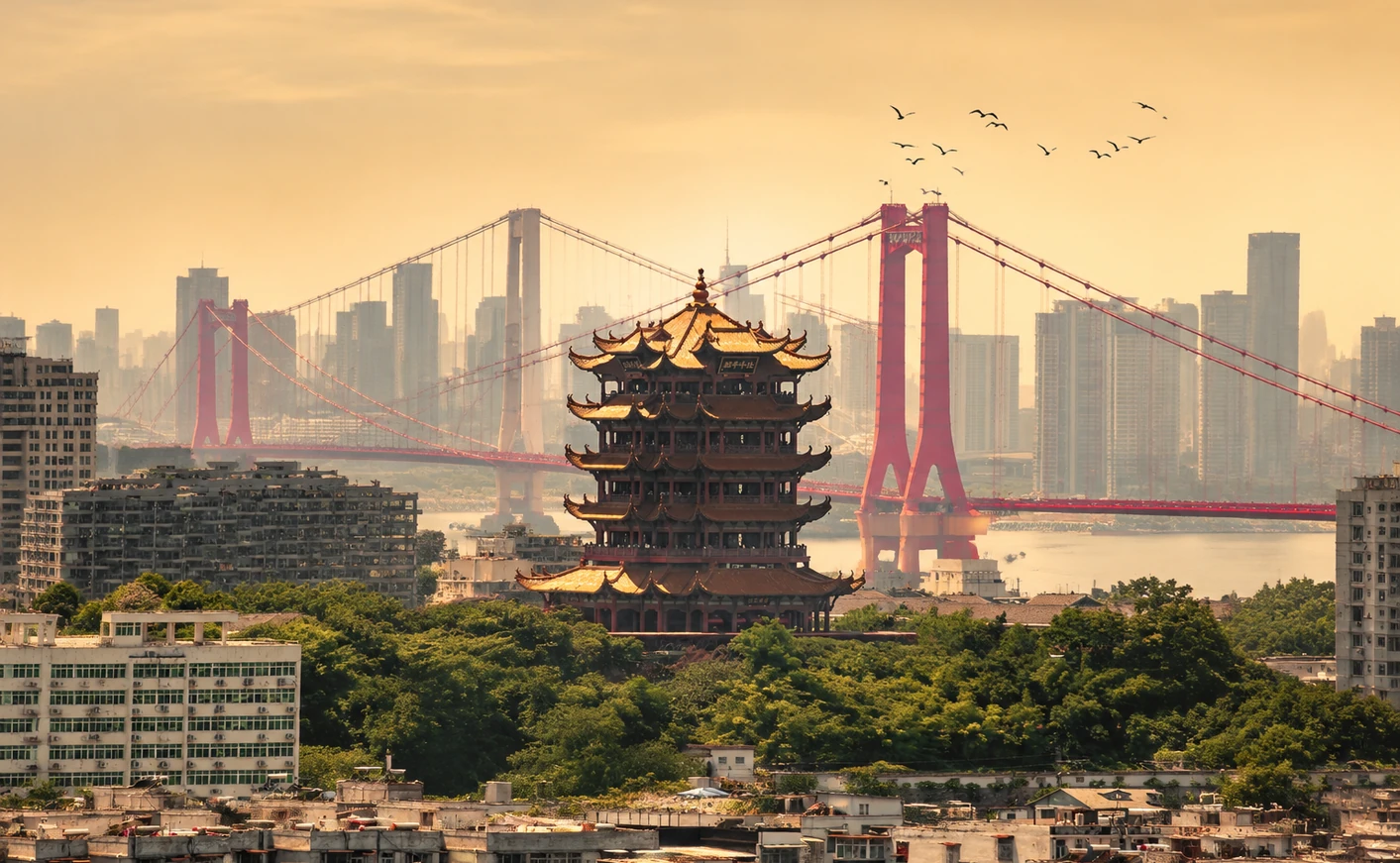
City overview · Reference-based AI imagery
Discover Wuhan
Wuhan history
Wuhan grew from Wuchang, Hankou, and Hanyang, three towns shaped by the Yangtze and Han rivers. The 1911 Wuchang Uprising gives the city a significant place in modern Chinese history, alongside its long commercial and industrial heritage.
Culture and everyday life in Wuhan
River commerce, university neighborhoods, and the breakfast tradition known as guo zao give Wuhan an energetic everyday character. Start a morning at local food stalls, then explore one riverbank or neighborhood at a time to understand its scale.
Wuhan food: what to eat
Hot dry noodles, coated in sesame sauce, are a breakfast staple. Doupi, filled bean-skin parcels, and mianwo, savory fried dough rings, add variety; trying several small breakfast items is a good way to experience the local food scene.
Things to see in Wuhan
Yellow Crane Tower and the Wuhan Yangtze River Bridge are recognizable landmarks, while East Lake offers a spacious contrast to the dense city. Distances are substantial, so plan river crossings and allow time between neighborhoods.
Getting around Wuhan independently
The city spreads across rivers, so group sights by area. Metro journeys can be more predictable than road crossings at busy times.
Plan your stay in Wuhan
Plan a self-guided stay with nearby sights grouped into relaxed daily routes, budget estimates in US dollars, Chinese address and ordering cards, and booking guidance. Your itinerary comes as an interactive HTML page and a print-friendly A4 PDF.
Plan your self-guided tripThis is a general city introduction. Opening hours, prices and booking rules should be checked before travel.